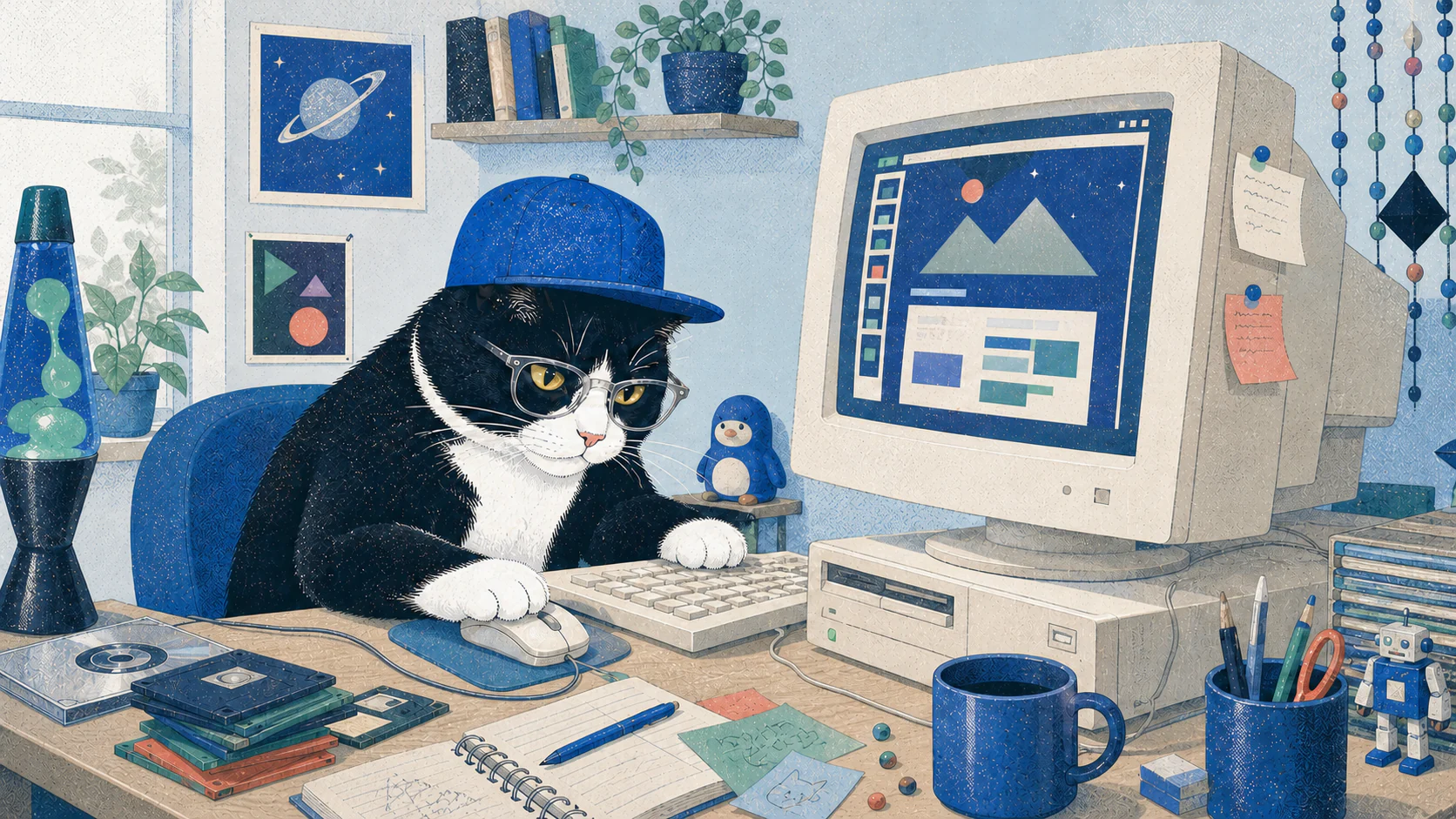
There was a time when having a place on the internet meant making one yourself.
Personal webpages lived on places like GeoCities. They had loud backgrounds, visitor counters, blinking text, and guestbooks where strangers could leave a message. They weren’t always beautiful, but they belonged to someone.
That was part of what made them interesting.
People built pages about their hobbies, artwork, collections, favorite music, or whatever happened to matter to them. There were no formulas to follow. Nobody was thinking about engagement or trying to please an algorithm. You made something because you wanted it to exist.
My first website started that way. It was a way to learn, experiment, and share things without asking anyone for permission.
You didn’t have to be yourself
The earlier internet also gave us a kind of anonymity that has mostly disappeared.
You could browse without giving every website your real name, phone number, birthday, and location. You could join a chat room with a username you invented five minutes earlier. On instant messengers and mIRC, strangers sometimes shared thoughts they couldn’t say to people in their everyday lives.
Of course, anonymity had its problems. People could lie. Some places were unsafe. The old internet was never as innocent as nostalgia makes it seem.
But there was also freedom in being unknown.
Not everything you said followed you forever. A conversation could simply be a conversation. It wasn’t automatically captured, shared, searched, and attached to your real identity.
You could try being someone else for a while.
Then the feed took over
Social media didn’t feel threatening at first. It was another kind of personal webpage. You made a profile, added friends, and posted small updates about your life.
Then the timeline changed.
Posts were no longer shown simply because they were new. Algorithms decided what deserved attention. Platforms learned that keeping people scrolling was more profitable than helping them leave satisfied.
Around the same time, mobile apps began replacing the open web. Instead of visiting websites, people opened separate apps for news, conversations, photos, videos, and shopping.
Blogs slowly became quieter. Thoughts that might once have become a full post were reduced to quick updates inside social feeds.
The web didn’t disappear. It became something we mostly experienced through a handful of companies.
Everything moves too quickly
Today, almost everything online is presented as content.
A personal thought is content. A family moment is content. A disagreement is content. Even an apology can become content.
The speed makes it difficult to stop and understand anything.
A short clip appears, and people are expected to form an opinion immediately. Context arrives too late, if it arrives at all. Fake arguments receive more attention than careful explanations. Everyone seems to be teaching a system, selling a shortcut, or presenting themselves as an expert.
When one format becomes popular, thousands of people copy it. The same titles, reactions, edits, and opinions appear everywhere because the formula has already proven that it can attract attention.
Then everyone forgets and moves on to the next thing.
We have access to more information than ever, but it can feel harder to think clearly.
AI makes this even stranger
AI has made useful things possible. It can solve problems quickly, help people learn, and give someone without traditional creative skills a way to make something.
It can also produce an overwhelming amount of disposable material. It has already changed jobs, disrupted creative work, and made many people uncertain about their future.
Both things can be true.
There’s no need to pretend that AI will save everything. There’s also no point pretending it will simply disappear. Most of us will learn to use it while quietly wondering what it might eventually do to our work.
Maybe hope isn’t the right word yet.
Maybe the honest response is to pay attention, use these tools carefully, and deal with what comes next when it arrives.
A smaller corner of the internet
We probably can’t return to the old internet. Some parts of it are better left in the past anyway.
But we can still make places that feel human.
We can publish thoughts that aren’t designed to go viral. We can take time to understand something before reacting to it. We can visit websites made by people rather than spending every spare moment inside a feed chosen for us.
A personal website won’t fix the internet.
It can still be a small reminder of what the internet once allowed: curiosity, experimentation, and the freedom to make something simply because you wanted to share it.
Maybe you remember that version of the internet too.
Maybe you miss it without realizing how much.