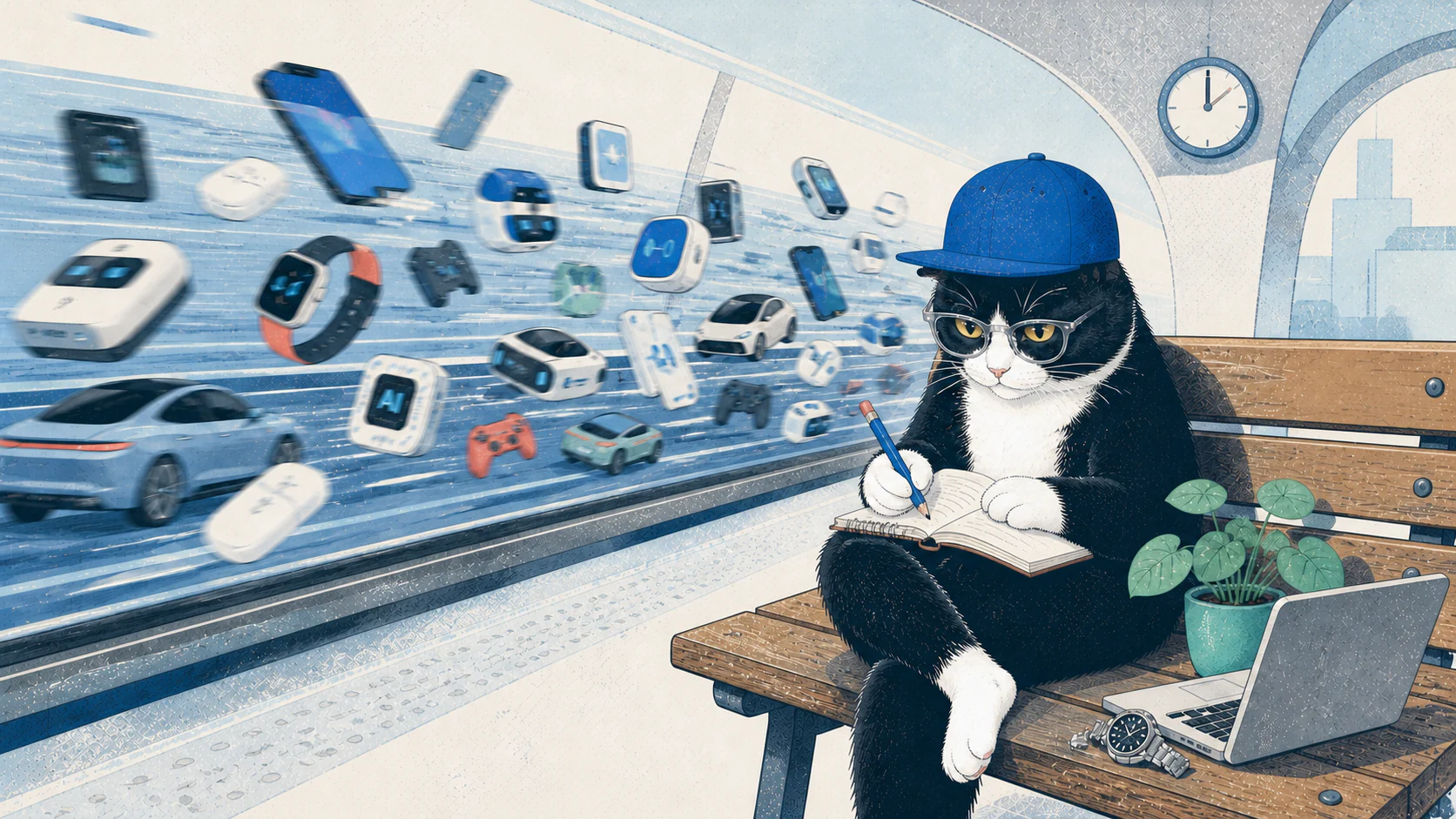
There’s always something new to fall behind on.
A new AI model appears. A better phone is announced. Electric cars become more common. Software changes its interface. Music equipment gets another update. Someone online discovers a new way to make money and insists everyone else is already late.
Even when none of these things matter to your daily life, the noise can make it feel like you’re missing something.
The problem isn’t just technology. The cost of living keeps climbing. Work feels less certain. People are trying to prepare for a future that keeps changing before anyone can understand it.
It creates a strange kind of anxiety.
You can be doing fine and still feel behind.
New doesn’t always mean necessary
At some point, many of us stop replacing things just because a newer version exists.
An Xbox still plays games. A 4K television still shows a clear picture. A phone can stay in your pocket until it no longer does what you need. A computer from a few years ago doesn’t become useless because a faster one was announced.
This isn’t giving up on technology. It’s learning to separate useful improvements from expensive distractions.
A smartwatch can do impressive things, but an automatic watch can last for decades without needing a software update. The older you get, the easier it becomes to appreciate things that don’t constantly ask to be replaced.
Maybe we don’t stop following trends because we can no longer understand them.
Maybe we simply realize that other parts of life deserve more attention.
Learning becomes more selective
When you’re young, learning can feel like preparation for some distant future.
Later, it becomes connected to how you live right now.
You learn something because work requires it. You learn because you’re curious. You learn because it could create another source of income. Sometimes you learn because staying employable depends on it.
The stakes feel different when other people depend on you.
That pressure can make failure feel more frightening. There’s less time to waste, and mistakes can feel more expensive. But age can also bring more patience. A failed attempt no longer has to mean you aren’t capable. It can simply show you what to try next.
Experience makes it easier to recognize patterns. Many new technologies are old ideas presented in different wrappers. The buttons move, the language changes, and the marketing becomes louder, but the basic problems are often familiar.
Experience can also create resistance. Old habits feel safe because they once worked. Sometimes the only way to understand a new method is to stop judging it from a distance and actually try it.
AI makes learning faster, but not automatic
AI can explain unfamiliar ideas, help build something from scratch, and make creative work more accessible. It can shorten the distance between wanting to try something and having a working first version.
That can make you feel capable again.
It can also be confidently wrong.
Learning from AI still requires judgment. An answer isn’t true because it arrived quickly or sounded certain. There’s a difference between receiving information and learning from someone who has lived through the problem.
The best use of AI may not be asking it to think for us. It may be using it to get started, test ideas, and understand enough to ask better questions.
The tool can help us move faster. Experience helps us decide where to go.
Attention is more valuable than keeping up
Nobody can follow every update, platform, device, investment, and online trend.
Trying to do it only makes everything feel equally urgent.
A simpler question is more useful:
Will this improve the way you live, work, or care for your family?
If it helps you earn, solve a real problem, protect your time, or support someone important to you, it may deserve your attention.
If it exists mainly to make you feel outdated, it probably doesn’t.
This doesn’t mean every interest must make money or serve a practical purpose. Curiosity and enjoyment matter too. But they should come from genuine interest, not from fear that everyone else is moving ahead.
There’s a difference between choosing to learn and being pressured to keep up.
The finish line keeps moving
The people who seem ahead are trying to catch something too.
Some are chasing money. Some are chasing attention. Others are buying every new device because stopping might force them to ask whether any of it has made life better.
There is no point where a person finally owns enough, knows enough, and becomes permanently current. Technology will keep changing. Another update will arrive tomorrow.
You don’t need to master all of it.
You need enough confidence to examine something new and decide whether it belongs in your life.
Maybe keeping up isn’t the goal.
Maybe the goal is knowing what matters, learning when it becomes necessary, and letting the rest pass without feeling guilty about it.